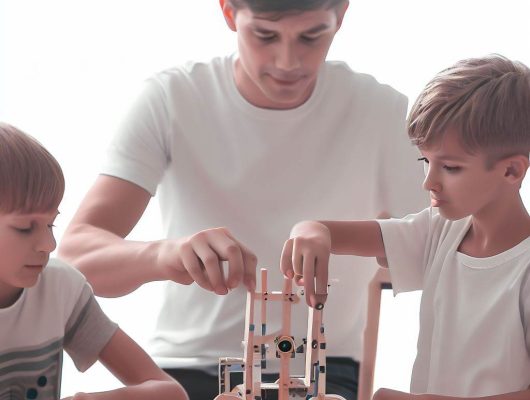
In the realm of childhood, where imagination knows no bounds, the paradox of creative play unfolds. This unique content unravels the tapestry of “The Creative Play Paradox,” delving into the extraordinary impact of imaginative toys on a child’s mind. From cognitive development to emotional intelligence, join us on a journey that reveals the hidden dimensions of play.
1. The Symphony of Synapses:
Imagine a child’s mind as a symphony of synapses eagerly awaiting the conductor of creative play. This section explores how engaging in imaginative play acts as a conductor, orchestrating the harmonious dance of neural connections and fostering cognitive growth.
2. Emotional Intelligence Unleashed:
Creative play is not merely a physical activity but an emotional odyssey. Here, we navigate the emotional landscape shaped by imaginative toys, uncovering how these playthings become vessels for the expression and understanding of complex emotions.
3. Problem-Solving Prowess:
The world of creative play is a training ground for future problem solvers. This section delves into the paradoxical nature of play, where seemingly simple activities with toys become the catalysts for developing a child’s problem-solving prowess.
4. The Canvas of Imagination:
Creative play is the canvas upon which a child paints the masterpieces of their imagination. Here, we explore how imaginative toys serve as the brushes and colors, allowing children to create, visualize, and manifest the extraordinary landscapes of their mind.
5. Social Skills Choreography:
The stage of creative play is where a child learns the choreography of social skills. This section uncovers the paradox of solo play leading to collaborative skills, as children navigate the intricacies of teamwork, communication, and empathy through their imaginative interactions.
6. Resilience Forged in Play:
Like a blacksmith forging resilience, the crucible of creative play tempers a child’s ability to bounce back from challenges. Discover how the seemingly carefree playtime paradoxically strengthens a child’s emotional resilience and adaptability.

7. The Language of Play:
Creative play introduces a unique language – a lexicon of make-believe, storytelling, and symbolic communication. This section decodes the linguistic paradox, showcasing how play acts as a language laboratory, honing a child’s verbal and non-verbal communication skills.
8. Neurological Synchronization:
The neurological dance during creative play synchronizes various brain regions. From the prefrontal cortex to the limbic system, witness the paradoxical harmony that unfolds, contributing to enhanced cognitive functions and emotional regulation.
9. Beyond Entertainment: The Educational Paradox:
While toys may seem like mere sources of entertainment, this section unveils the educational paradox of creative play. Explore how educational outcomes seamlessly emerge from play, turning every toy into a silent tutor in a child’s developmental journey.
10. Fostering a Lifelong Love for Learning:
Creative play sets the stage for a lifelong love affair with learning. Delve into the paradox of play as an everlasting spark, igniting a passion for exploration, curiosity, and continuous learning throughout a child’s life.
11. The Playful Path to Academic Excellence:
Creative play isn’t just a diversion; it’s a pathway to academic excellence. Explore how the paradox of play seamlessly integrates with formal education, serving as a catalyst for improved academic performance and a love for scholarly pursuits.
12. Building Blocks of Confidence:
Like constructing a tower with building blocks, creative play builds the foundation of a child’s confidence. This section uncovers the paradoxical process where seemingly simple play activities become the building blocks that empower children to believe in themselves and their abilities.

13. Crafting Tomorrow’s Innovators:
The seeds of innovation are sown in the playground of creative play. Delve into the paradox of play as a crucible for cultivating the innovative thinking that will shape the leaders and innovators of tomorrow.
14. The Art of Mindfulness in Play:
Creative play introduces a paradoxical dimension of mindfulness, where children immerse themselves fully in the present moment. Explore how play becomes a sanctuary for mindfulness, promoting mental well-being and fostering a connection between mind and body.
15. A Symphony of Sensory Stimulation:
The paradox of play extends to the sensory realm, acting as a symphony of sensory stimulation. Uncover how imaginative toys engage multiple senses, enhancing sensory integration and contributing to a child’s holistic development.
16. Respecting the Pace of Play:
The pace of play is a paradoxical dance, respecting the natural rhythm of a child’s exploration. This section explores the importance of allowing play to unfold organically, acknowledging that the seemingly unhurried moments paradoxically contribute to accelerated development.
17. The Technological Paradox: Balancing Screen Time:
In the digital age, technology becomes a paradox within creative play. Discover the delicate balance required to leverage technology as a tool for imaginative play while ensuring it doesn’t overshadow the tangible, hands-on experiences that contribute to a child’s development.
18. The Legacy of Play: Passing Down Creativity:
The paradox of play extends beyond individual experiences, becoming a legacy passed down through generations. Explore how the creative play experiences of today shape the cultural understanding and approach to childhood for the generations to come.

19. Personalizing Play: The Individualized Paradox:
Every child is unique, and so is their approach to play. This section delves into the paradox of personalizing play experiences, recognizing that what sparks the imagination of one child may differ significantly from another, emphasizing the importance of individualized approaches to play.
20. The Endless Echo of Playful Memories:
Concluding our exploration, we reflect on the paradox of play’s timeless quality. Witness how the memories created in the world of creative play echo endlessly through a person’s life, becoming a source of joy, inspiration, and nostalgia.
Conclusion:
As we conclude our exploration of “The Creative Play Paradox,” let us celebrate the intricate dance between simplicity and complexity that unfolds in the world of imaginative toys. May this content serve as a testament to the profound impact that seemingly simple playthings can have on shaping the extraordinary minds of our children.
This content aims to illuminate the multifaceted impact of creative play on a child’s mind, exploring cognitive development, emotional intelligence, problem-solving skills, social skills, resilience, linguistic development, neurological synchronization, educational outcomes, and a lifelong love for learning.